
Antimicrobial
Textile Finish for Long-Lasting Fabric Protection
Reseda Lifesciences develops antimicrobial textile finish solutions that are built for real usage conditions. These finishes are designed to help control microbial activity on fabric surfaces while maintaining softness, breathability, and overall fabric quality. The focus remains practical. Support fabric hygiene without disrupting how the material feels or behaves.
Why Is Antimicrobial Textile Finish Becoming Important in Modern Textiles?
Textiles are used across spaces where contact is frequent and continuous. In hospitals, fabrics are reused across patients. In hospitality, bedding and upholstery go through repeated cycles. In workwear, garments are exposed to sweat, moisture, and long hours of use.
An antimicrobial textile finish helps reduce the buildup of odor-causing microbes and supports fabric freshness between washes. It also contributes to maintaining fabric strength over time, especially in high-use environments.
There is also a shift in how textile buyers evaluate products. Beyond design and cost, they now consider functionality. Finishes that support hygiene and durability are becoming part of standard textile expectations.
How Does an Antimicrobial Textile Finish Work on Fabric?
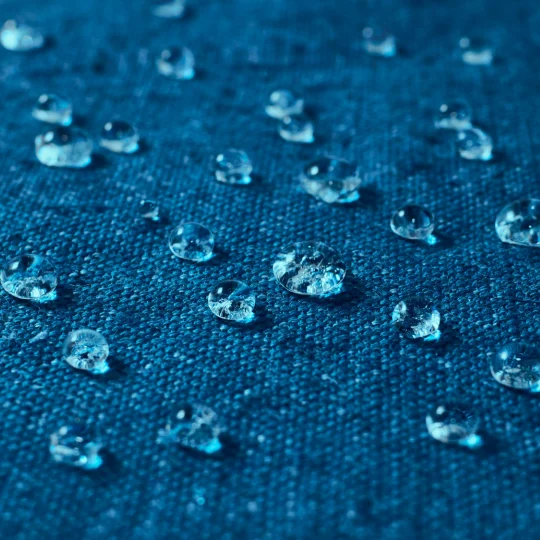
The finish works at the fabric surface level. When microorganisms come in contact with treated fabric, the formulation interacts with them in a way that limits their growth or activity.
For this to work effectively, the finish must be evenly applied and properly bonded to the textile. Common methods like padding or coating ensure that the treatment is distributed across the fabric and remains stable during use.
Application consistency plays a key role. When the finish is applied correctly, performance remains uniform across the entire material rather than varying across sections.
Where Is This Finish Commonly Used?
This type of finish is widely used across industries where hygiene and repeated use are part of daily operations.
Healthcare textiles include bed sheets, patient gowns, and curtains. Hospitality applications include bedding, towels, and upholstery. In homes, it is used in bedsheets, cushions, and curtains. Workwear and uniforms also benefit from this finish in environments where garments are worn for extended hours..
Textile manufacturers are increasingly integrating this treatment during production itself, which allows better control over quality and consistency.
What Factors Influence Performance on Fabric?
Durability through washing cycles is another key factor. The finish must remain stable under heat, moisture, and mechanical movement. Testing for wash durability helps ensure consistent performance over time.
Compatibility with dyes and other finishing processes is also considered during production to maintain overall fabric quality.
How Is This Finish Applied During Textile Processing?
Methods such as padding, exhaustion, or coating strategies for long-term durability are used depending on the fabric and application requirements. Once applied, curing helps bind the finish to the material surface.
Applying it during manufacturing allows textile producers to deliver ready-to-use fabrics without requiring additional post-treatment.

How Does It Support Long-Term Fabric Performance?
Fabrics treated with this finish tend to maintain freshness for longer durations, especially in high-use environments. Reduced microbial buildup helps limit odor and supports overall fabric integrity.
Over repeated usage cycles, this contributes to more stable performance. For industries that rely on consistent textile quality, this becomes a practical advantage.
Conclusion
An antimicrobial textile finish adds functional value to fabrics that are used daily and repeatedly. It supports hygiene, helps maintain freshness, and contributes to fabric durability over time.
Reseda Lifesciences develops antimicrobial textile finish solutions that integrate smoothly into textile processing and perform in real-world conditions. As demand for functional textiles continues to grow, this finish plays a key role in how fabrics are designed and used.
If you are exploring advanced textile treatments, visit our antimicrobial textile finish page to understand application options and product suitability for your fabric requirements.
1. What is an antimicrobial textile finish used for?
An antimicrobial textile finish is used to control microbial activity on fabric surfaces, helping reduce odor formation and maintain hygiene in textiles used across healthcare, hospitality, and everyday environments with frequent use.
3. How long does the antimicrobial textile finish remain effective after washing?
The effectiveness of an antimicrobial textile finish depends on application quality, fabric type, and washing conditions, with properly applied finishes maintaining performance across multiple wash cycles.
5. Is an antimicrobial textile finish suitable for healthcare textiles?
An antimicrobial textile finish is widely used in healthcare textiles such as bed linens, patient gowns, and curtains, where maintaining hygiene and fabric performance is essential.
7. Does antimicrobial textile finish help maintain freshness between washes?
An antimicrobial textile finish helps reduce microbial buildup on fabrics, which supports odor control and helps maintain freshness between regular washing cycles.
2. Does an antimicrobial textile finish change the fabric's feel or texture?
An antimicrobial textile finish is designed to maintain the original softness, breathability, and appearance of the fabric while adding functional protection without affecting comfort during regular use.
4. Can antimicrobial textile finish be applied to cotton and synthetic fabrics?
An antimicrobial textile finish can be applied to cotton, polyester, and blended fabrics when the formulation and application process are adjusted to match the specific textile material.
6. At what stage is antimicrobial textile finish applied in textile manufacturing?
An antimicrobial textile finish is typically applied during the final finishing stage after dyeing, using methods such as padding or coating to ensure uniform distribution and proper bonding.
8. Why are textile manufacturers adding antimicrobial textile finish to fabrics?
An antimicrobial textile finish is increasingly used to meet demand for functional textiles that support hygiene, durability, and consistent performance in high-use environments.