
Natural Veterinary Products: The Shift Happening Quietly Across Farms and Homes
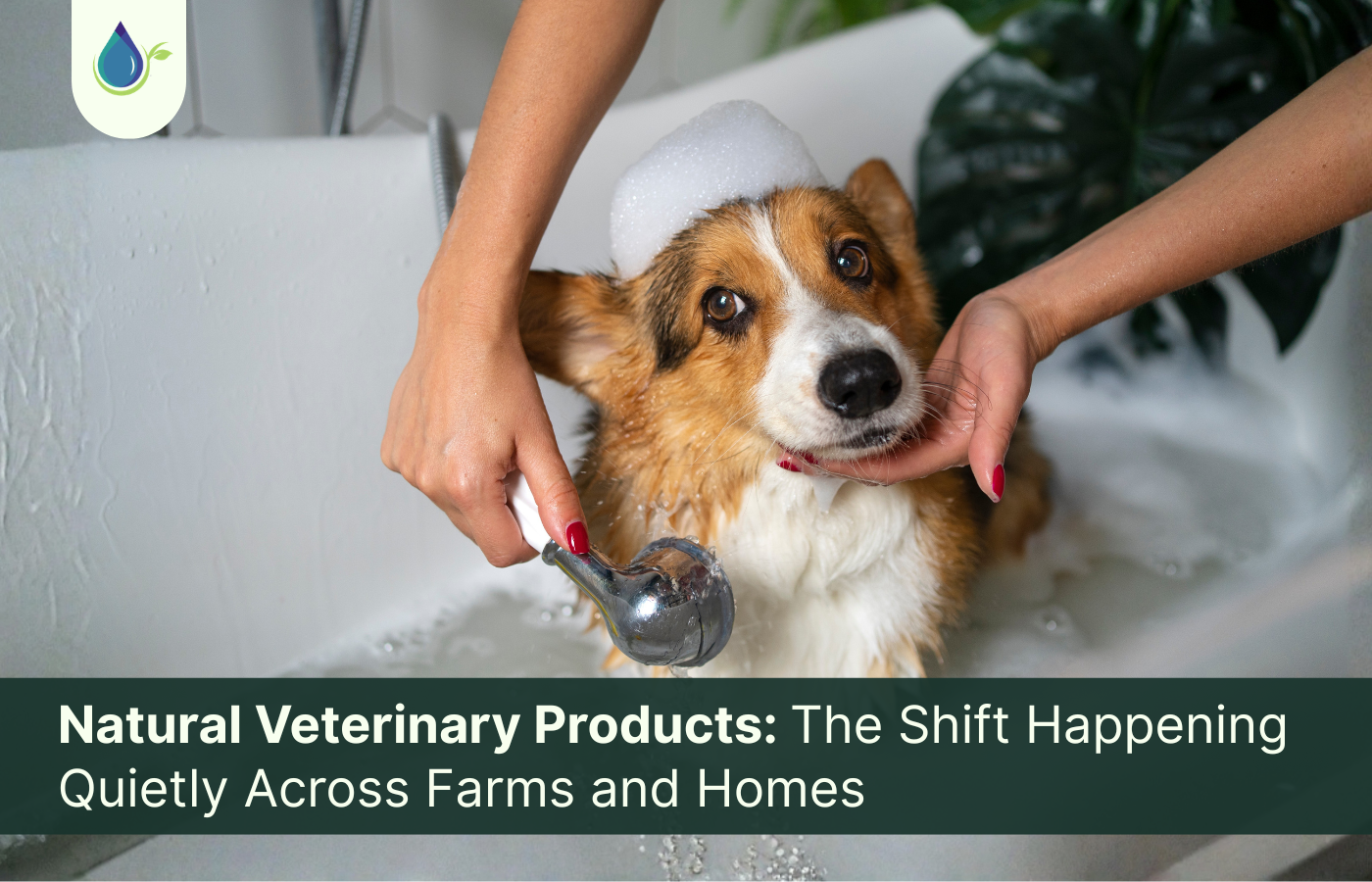
There comes a moment on most farms when someone pauses and wonders: Are we sure what we’re putting on these animals is truly safe? It’s not a dramatic revelation. It usually comes up quietly, when a dairy farmer notices irritation on a cow’s udder after repeated treatments, or when a poultry keeper finds that their usual coop spray is not keeping mite numbers down the way it once did. The answer, more often than not, leads them to start looking into natural veterinary products. And what they find tends to change how they think about animal care for good.
The best natural veterinary products have been tested in the lab, made from concentrated plant actives, and tested for safety and efficacy. They work on what is often missing in the process, such as residues, synthetic toxins, and other chemical compounds that have the opportunity to build up in the animals’ tissue and the soil over time. Reseda Lifesciences is designed to fill this gap by providing herbal products for dairy cattle, poultry, horses, and pets, allowing farmers to get good results without compromising their responsibility.
Why Are So Many Livestock Farmers Switching to Natural Veterinary Products?
Mastitis is a costly disease for dairy farms, causing them to lose milk, money on treatment, and, in severe cases, having to slaughter infected cows prematurely. The standard treatment for mastitis has been antibiotics, which work, but at what cost? There is a long list of side effects, including residues in the milk, which affect the quality of the milk at the processing stage. There is also the problem of antibiotic resistance, which, ironically, causes the treatment to fail in the long run. It’s an endless cycle.
Reseda’s herbal remedy for mastitis works differently from antibiotics. While antibiotics work by suppressing the immune system, Reseda’s herbal remedy uses antioxidants, essential vitamins, and detoxifying agents to combat udder inflammation. The fact that Reseda’s herbal remedy is working for many farmers who use it on their farms is evident, considering that it actually boosts the immune system to combat recurring cases of mastitis. The same product also works in dairy and poultry, so farms running mixed operations get more from a single solution.
Pest control is the second biggest driver of the shift. Ticks, fleas, mites, red mites in poultry housing, flies around barns, these have historically been managed with organophosphates and synthetic pyrethroids. The documented problem with both is resistance. Pests develop tolerance when exposed repeatedly to the same chemical class. Farmers end up increasing doses or rotating between compounds, each with its own toxicity profile. Natural veterinary products built on herbal actives sidestep this entirely because botanical repellent mechanisms work differently at the biological level, and resistance development is far slower.
Can Natural Veterinary Products Actually Meet Organic Certification Requirements?
This is the question that concerns farmers most who have gone ahead and invested in organic certification or are planning to achieve it in the near future. The short answer is yes, provided that the products are not made with synthetic pesticides, microplastics, and other non-allowed ingredients. Reseda’s entire range of products is designed to meet these requirements perfectly. First and foremost, they are not made with microplastics, synthetic irritants, or the chemical compounds that cause organic operations to fail their compliance tests.
For poultry farmers, this is particularly relevant since red mites in coops are considered one of the most difficult pests to deal with in the field. In fact, one adult female red mite can produce as many as eight eggs per cycle. The conventional fix involves repeated chemical spraying that most organic certifiers will not allow. Reseda’s herbal misting liquids and sprays handle red mite control through botanical actives that remain non-toxic and residue-free, holding up to the scrutiny of organic certification bodies.
The yard wash that accompanies the poultry range extends this to the surrounding environment without disrupting soil biology. That matters more than people sometimes realise. Harsh disinfectants used in coop cleaning can leach into the ground and alter microbial activity, which affects pasture quality over time on farms where birds have outdoor access. A plant-based, biodegradable option avoids this entirely.
Equine and Pet Care: Where the Details Matter Most
Horses are high-contact animals. Their skin covers a large surface area, and they live outdoors in environments where ticks, mites, and flies are constant. Reseda’s equine range covers this comprehensively through shampoos and sprays targeting ticks, fleas, mites, and flies simultaneously, alongside antimicrobial wound sprays, antifungal dermatological cleansers, and rug cleaners. The wound care formulations in this range are not cosmetic products. They contain botanically derived antimicrobial and antibacterial actives designed to prevent secondary infections in skin injuries, which are common in horses with outdoor access.
For companion pets, the pest control problem looks different, but the stakes are similar. Dogs and cats that pick up ticks or fleas in urban green spaces or during travel are treated repeatedly throughout their lives with chemical spot-on treatments and synthetic shampoos. These compounds, particularly certain pyrethroid-based products, carry documented risks including skin sensitivity and, in some cases, neurological effects in cats specifically. Reseda’s pet range, which includes water-based insect sprays, herbal shampoos with organic surfactants, spot treatments, pest-repellent creams, and natural collars with embedded actives, offers year-round pest protection without those risks.
How Does Mosquito Control Around Barns Fit Into a Natural Veterinary Approach?
Mosquito pressure around livestock housing is often underestimated as a veterinary issue. In many regions across India and other tropical farming environments, mosquitoes are vectors for disease transmission that directly affects livestock productivity. Treating this with conventional fogging methods introduces chemical load into enclosed or semi-enclosed spaces where animals eat, drink, and sleep. Residue accumulation is a real concern.
Reseda’s mosquito control line for veterinary environments includes adulticide sprays, larvicide and maggoticide options, and diffuser or fogging systems. All of them are formulated to be residue-free and safe for direct use around animals. The larvicide component is particularly useful for farms with standing water near housing, where mosquito breeding occurs most rapidly. Addressing the larval stage prevents adult populations from establishing rather than just knocking them down after the fact.
Conclusion
Farmers and veterinarians who make the transition to natural products are not doing it for appearances’ sake. They are doing it because natural products work better over time, cause fewer problems down the road, and stand up to certification and quality buyer scrutiny. Natural products for veterinarians have clearly passed the experimental phase. If you are a farmer, stable owner, or looking to develop a product line for animal care, look through Reseda’s complete range of natural veterinary products and find products developed specifically for your farm or stable
FAQs
1. What exactly are natural veterinary products, and how are they different from conventional ones?
Natural veterinary products use plant-based or herbal actives instead of synthetic chemicals to treat conditions, control pests, and maintain animal health. The key difference is what they leave out: no synthetic toxins, no microplastics, no residues that carry over into milk, meat, or the surrounding environment after use.
3. Can I use natural veterinary products on my dairy cows without affecting milk quality and certification?
Yes. Herbal mastitis and udder care products that are not made with synthetic chemicals and antibiotic residues are not likely to impact any of the parameters that define milk quality and certification.
5. Are Reseda natural veterinary products safe to use on horses that have skin sensitivity issues?
Yes. Reseda natural veterinary products are dermatologically tested and are not made with synthetic chemicals that may cause skin irritation and sensitivity problems in horses.
7. Can I source natural veterinary products under my own brand through Reseda?
Yes. Reseda supports OEM and private-label partnerships with custom formulations, scalable production, and flexible packaging. Distributors and animal care brands can build their own natural veterinary product line using Reseda’s manufacturing infrastructure, with biodegradable and microplastic-free ingredients built into every base formulation..
2. Are plant-based veterinary products actually proven to work?
Yes, when properly formulated. Effectiveness depends on the concentration and quality of plant actives used, not just the fact that something is labelled herbal. Reputable manufacturers like Reseda conduct lab testing and dermatological evaluation on every product to verify both safety and performance before it reaches the market.
4. How good are natural insect sprays against red mites in poultry coops compared to synthetic chemicals?
Herbal insect sprays and mister liquids containing concentrated botanical extracts are good for controlling red mite infestations in poultry coops. Unlike synthetic chemicals, natural insect sprays against red mites are not likely to cause resistance problems, which is another advantage of using these products in poultry coops.
6. I have a poultry farm that is certified organic. Will Reseda's natural products pass the scrutiny of the certification standard?
Yes. Reseda natural products for poultry are not made with synthetic pesticides and other chemicals that may not pass the scrutiny of the organic certification standard for farms that produce organic products. However, make sure that each product does not contain any of the restricted substances according to your certification standard’s restricted substances list before initial use of the product.
8. What is the best way to manage mosquitoes around livestock housing without exposing animals to chemical residues?
Using larvicide treatment for standing water near housing combined with residue-free herbal adulticide spray or fogging for adult mosquitoes is the most practical approach. Reseda’s mosquito control range covers both stages and is safe for use in direct animal contact zones, making it suitable for enclosed and semi-enclosed barn settings.