
Grape Seed Extract in Modern Hair Care Formulations
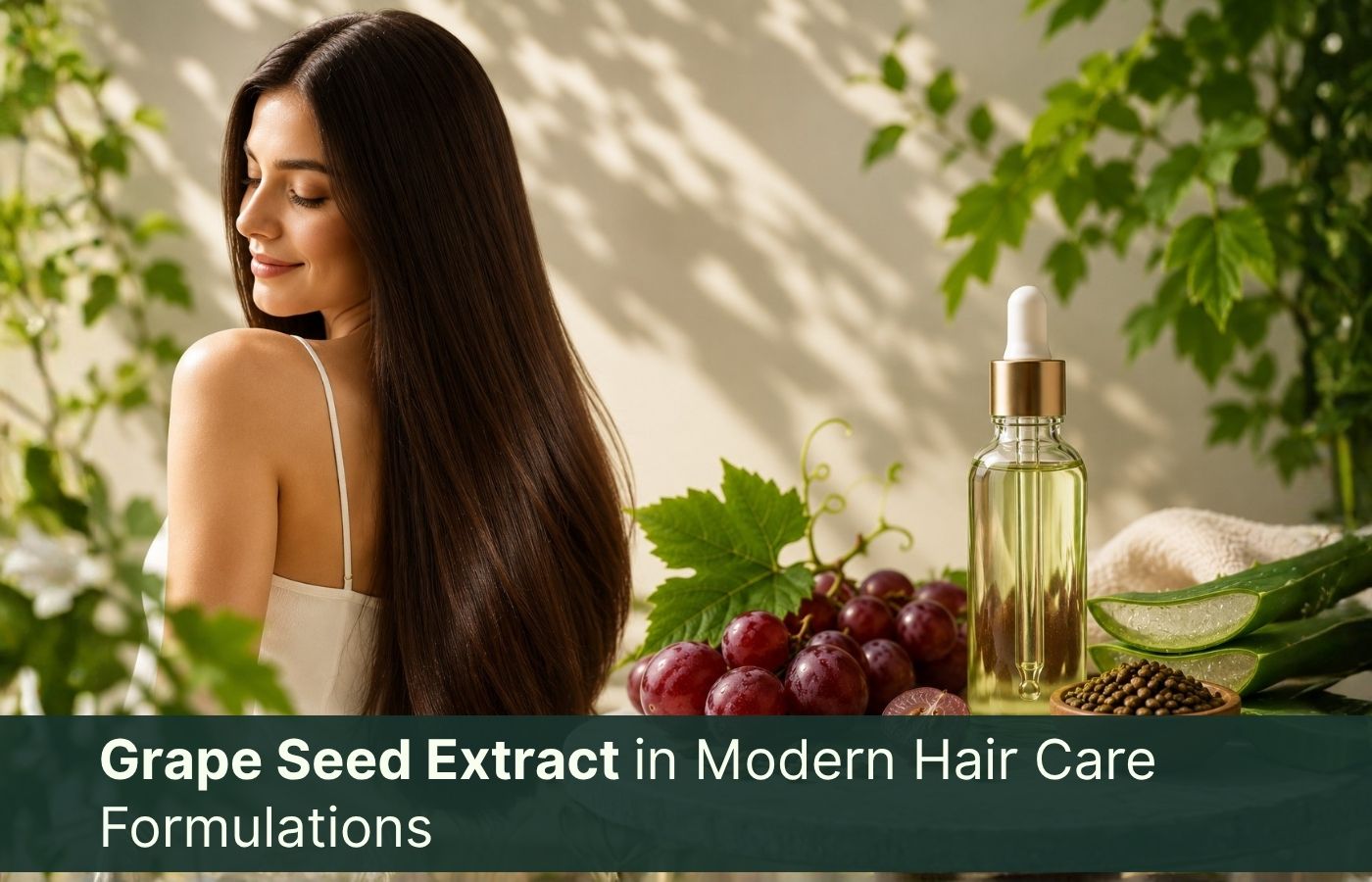
This shift has changed how brands think about hair care. Consumers are noticing botanical ingredients, asking what they do, and looking for products that feel lighter, cleaner, and easier to use regularly. Among those ingredients, grape seed extract is becoming more visible in shampoos, scalp refreshers, conditioners, serums, and leave-in products.
The interest is not only about trends. It reflects a larger movement toward ingredient-led hair care, where plant-based components are selected for how they fit into everyday formulations. For brands, formulators, and ingredient suppliers, grape seed extract offers a botanical story that feels familiar, practical, and relevant to modern product development.
What is grape seed extract doing in hair care?
It is not the kind of ingredient that needs to dominate a formula. Instead, it often works as part of a broader botanical blend. A shampoo may combine it with mild cleansers. A scalp spray may pair it with aloe vera or herbal extracts. A leave-in product may use it alongside conditioning agents.
That flexibility is one reason grape seed extract is being explored more often in modern hair care development.
Why are hair care brands paying attention to botanical ingredients?
This has encouraged brands to choose ingredients that feel recognizable and easier to communicate. Botanical extracts often fit that expectation because they connect naturally with plant-based beauty and clean-label positioning.
Grape seed extract fits into this space because it gives brands a plant-derived ingredient that can be used in different formats without making the product feel too heavy or complicated.
For modern hair care brands, the ingredient conversation is no longer separate from the product experience. Both need to work together.
What are the grape seed extract benefits for hair formulations?
In practical product development, grape seed extract may support:
● botanical positioning
● ingredient transparency
● scalp-focused product stories
● lightweight hair care formats
● compatibility with shampoos and refreshers
● use in leave-in or rinse-off products
The real benefit for brands is that it can become part of a formulation that feels modern, plant-based, and suitable for regular use.
For consumers, the appeal is different. They see a familiar botanical ingredient on the label and feel more connected to the product’s ingredient story.
How is grape seed extract used in scalp-focused products?
This is where grape seed extract can fit naturally. Scalp refreshers , light sprays, and everyday hair mists often need ingredients that feel suitable for regular application without making the product feel dense.
In these formats, grape seed extract may be combined with water-based systems, aloe vera, herbal extracts, or mild fragrance notes. The aim is usually to create a product that feels easy to use, especially for people who want lighter grooming options between full wash routines.
Why are consumers reading hair care labels more carefully?
Some want plant-based products. Some want lightweight textures. Some want less fragrance. Others simply want to understand what they are applying to their hair and scalp.
This has made ingredient clarity more important than ever.
A formula does not need to sound overly technical to feel credible. In fact, many consumers now prefer products that explain ingredients in a straightforward way. When grape seed extract appears in hair care, it gives brands an ingredient that can be explained without overcomplicating the conversation.
Why is grape seed extract UK becoming a common search?
For hair care businesses, sourcing is not only about finding an ingredient. It is about consistency, documentation, compatibility, and reliable supply.
Manufacturers usually look for:
● stable ingredient quality
● clear technical information
● formulation compatibility
● batch-to-batch consistency
● support for personal care applications
This is especially important for companies developing shampoos, scalp refreshers, conditioners, and plant-based hair care ranges.
How does grape seed extract fit into clean-label hair care?
Grape seed extract fits well into this movement because it supports a plant-based product narrative. It can be used in formulations where the brand wants to highlight botanical ingredients without making the formula feel overly complex.
In hair care, this matters because consumers use products repeatedly. Shampoos, sprays, conditioners, and serums become part of weekly or daily routines. Ingredients that feel familiar and practical can help make these routines easier to trust.
What should brands consider before using grape seed extract?
Before using grape seed extract, hair care brands should consider the product type, formulation base, application method, ingredient compatibility, and the claim language used on packaging.
A rinse-off shampoo will use botanical extracts differently from a scalp spray or leave-in product. A water-based refresher may need different stability considerations compared to an oil-based serum.
The ingredient should support the product’s purpose, not just appear on the label for trend value.
Conclusion
The growing interest in grape seed extract benefits shows that consumers want to understand not just what a product does, but what it contains. At the same time, searches such as grape seed extract UK show how brands and formulators are thinking more carefully about sourcing, consistency, and product development.
For companies working in plant-based personal care, grape seed extract offers a useful botanical direction. Reseda Lifesciences continues to explore ingredients and formulation approaches that support modern hair care products designed for today’s ingredient-conscious consumers.