
Textile Finishing Process: From Pre-treatment to Quality Control
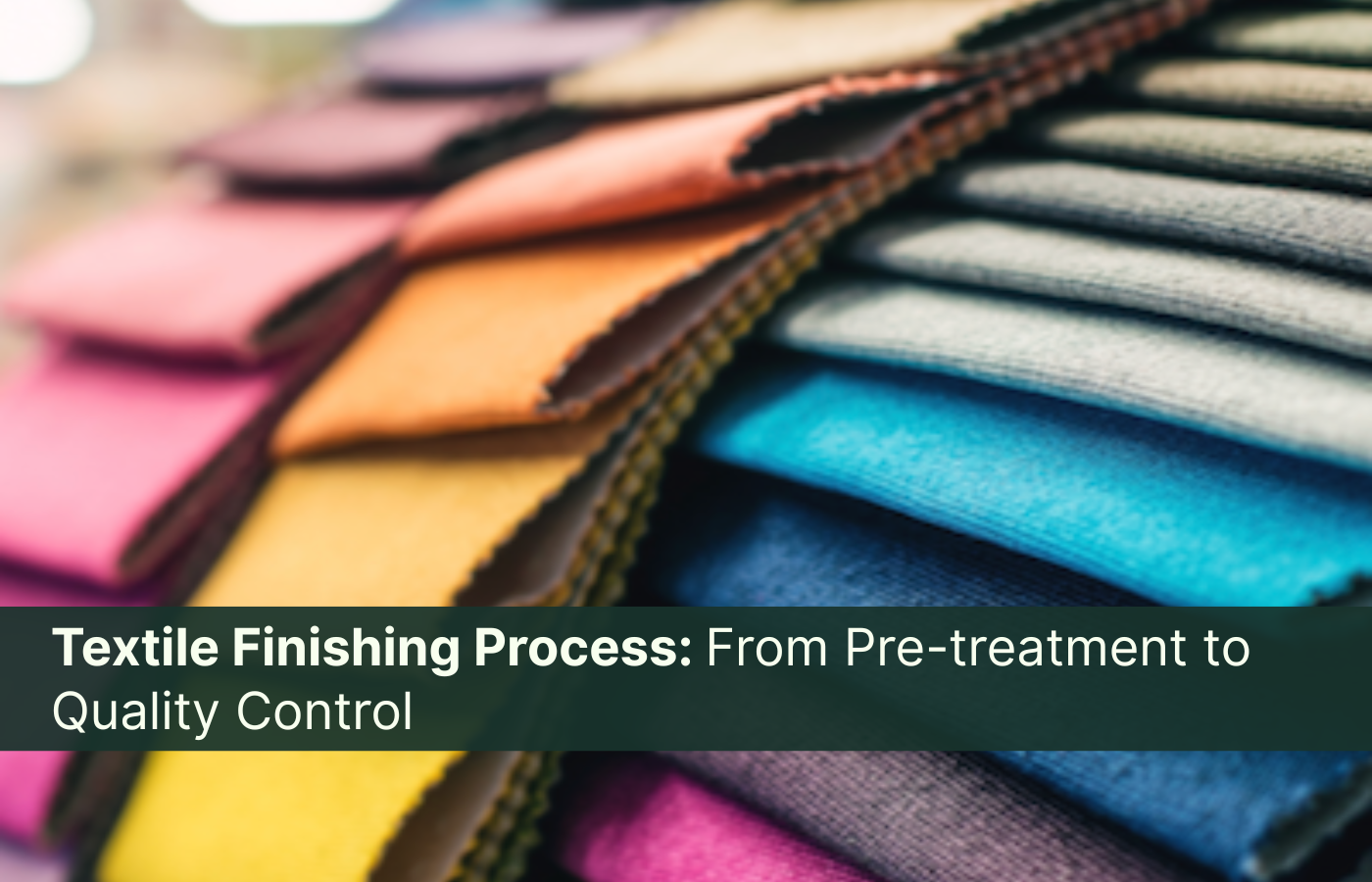
That gap is filled by the textile finishing process. It is not a single step but a sequence of stages that gradually shape how fabric behaves in real use. Each stage plays a specific role, and together they turn raw material into a finished product.
What is the textile finishing process, and why is it done step by step?
Instead of one treatment solving everything, this process works like a controlled flow where every step adds a layer of performance.
Pre-treatment
This ensures that later treatments are absorbed evenly. Without proper preparation, later stages may lead to uneven results.
Scouring
This stage is especially important for natural fibres like cotton, where natural substances can interfere with finishing performance.
Singeing
Singeing smooths the fabric surface by removing loose fibers. This step improves appearance and reduces fuzziness.
A clean surface also helps in achieving better consistency in later stages.
Mercerization
At this point, the fabric begins to feel more refined and stable, making it suitable for further treatments.
Finishing Application
For example, antimicrobial finishes are used in healthcare textiles, while odor control or cooling finishes are applied in apparel. Many modern systems now use plant-based formulations that integrate into production while supporting performance needs.
Conditioning
This stage ensures that performance is balanced with comfort, not treated separately
Fixation
It ensures that the effects remain effective after washing and repeated use.
Quality Control
Testing ensures that the finishing has been applied correctly and that the fabric is ready for its intended application.
How is the textile finishing process adapting to current industry needs?
There is also growing attention on solutions that integrate easily into existing setups and maintain consistent results across different fabric types.
Conclusion
Understanding this process helps explain why two fabrics that look similar can behave very differently over time.
If you are exploring better fabric performance, learning more about textile finishing process solutions can be a practical starting point.
FAQs
1. What is the textile finishing process in simple terms?
The textile finishing process refers to a sequence of treatments applied after fabric production to improve usability, performance, and appearance for real-world applications.
3. What role does pre-treatment play in this process?
Pre-treatment removes impurities from the fabric surface, helping later treatments absorb evenly and perform as intended during subsequent stages.
5. Can finishing affect fabric comfort?
Yes, conditioning steps within the textile finishing process improve softness and feel, making fabrics more suitable for everyday use.
7. How long do finishing effects last?
Durability depends on the formulation and fixation method. Many finishes are designed to last through multiple wash cycles while maintaining performance.
2. Why is the textile finishing process done in stages?
The textile finishing process is divided into stages because each step prepares the fabric for the next, ensuring better consistency and performance in the final material.
4. How does finishing improve durability?
Finishing improves durability by strengthening fibres and ensuring treatments remain effective after washing and regular use.
6. Is this process used for all types of fabrics?
The textile finishing process is applied to natural, synthetic, and blended fabrics, with adjustments based on fibre type and application.
8. How is the textile finishing process evolving today?
The textile finishing process is evolving toward more efficient systems that combine multiple functions and integrate smoothly into modern production setups.
We can all reap the benefits of studying more regarding ourselves and our
overall health and health. Particular actions and exertion amounts can easily
contain superb gain to us, and we all have to study even more about them.
Your weblog seems to have given beneficial information that is helpful to numerous cultures and individuals, and I
love the showing your proficiency in this way.